Distributed MCP: Bringing the Model Context Protocol to the Sovereign Edge
MCP is becoming the standard for how LLMs talk to enterprise data and tools. Centralized cloud breaks it on identity, audit, and sovereignty. Here is the distributed alternative.
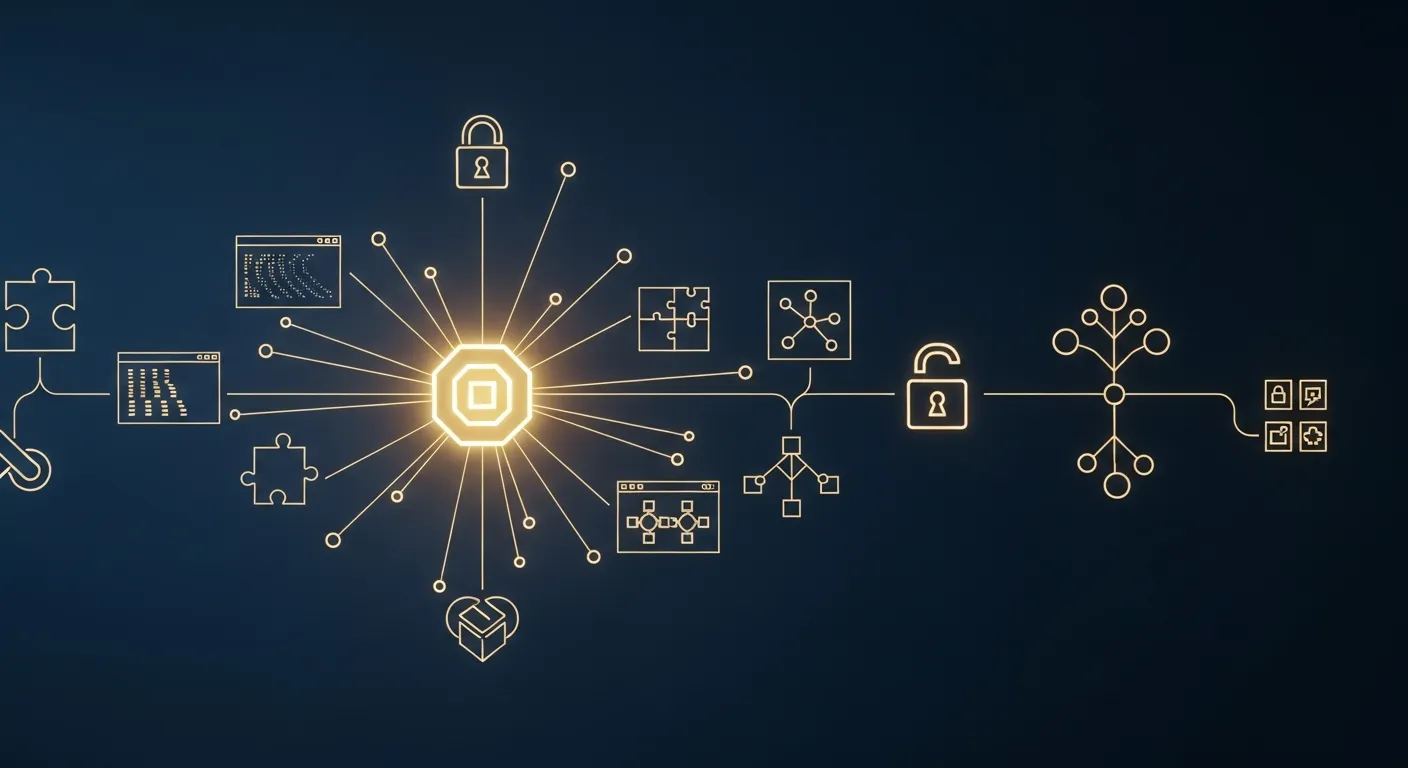
The Model Context Protocol (MCP) is rapidly becoming the standard for how large language models interact with enterprise data and tools. As an open protocol, it gives organizations a vendor-neutral way to wire models into the systems they actually run on. But as teams move from experimental chatbots to production-grade autonomous agents, centralized cloud architecture introduces critical failures in identity, auditability, and data sovereignty.
To address these, Parinita AI Edge built Parinita Flow, an MCP-native sovereign automation platform deployed across a 101-POP distributed infrastructure. This isn’t just a performance optimization — it is a structural requirement for secure enterprise AI.
| Feature | Traditional AI Routing | MCP (Coordinated Synthesis) |
|---|---|---|
| Model usage | Selects one model | Coordinates multiple models |
| Output handling | Discards alternative outputs | Synthesizes collective reasoning |
| Optimization goal | Optimized for cost | Optimized for accuracy |
| State | Stateless requests | Persistent orchestration |
| Workflow path | Single inference path | Parallel reasoning workflows |
| Context retention | Limited context retention | Distributed memory coordination |
Why centralized AI inference is failing enterprise AI
Standard centralized workflow platforms (Zapier, Make) and early MCP implementations suffer from four primary failure modes that distributed compute solves.
- Anonymous tool execution. Most platforms execute tool calls using only a static API key or OAuth token. In a multi-agent environment, there is no way to attribute a specific action to a specific agent instance or its unique authorization scope.
- Mutable audit trails. Application-layer logs are typically stored in mutable databases that can be edited or deleted. For regulated industries like healthcare (HIPAA) or defense (ITAR), these logs do not constitute defensible audit artifacts.
- Sovereign boundary violations. Centralized routing forces sensitive enterprise data to traverse third-party cloud infrastructure (e.g., AWS us-east-1). This creates immediate compliance violations for organizations with strict data residency requirements.
- Single-agent bottlenecks. Modern agentic workloads require parallel execution of hundreds of tool calls per second. Centralized systems lack the orchestration primitives to manage that volume while maintaining state isolation between agents.
The distributed solution: Parinita Flow
Parinita Flow solves these challenges by anchoring MCP execution to a distributed, four-layer sovereign stack.
1. Hardware-enforced identity (Crucible)
Every MCP tool call processed in the distributed network is governed by Parinita Crucible, a sovereign AI network operating system. Instead of relying on easily spoofed application tokens, Crucible encodes workload identity (tenant, plane, POP, and service-class) directly into every packet. This identity is enforced at the hardware level via ConnectX-7 NICs using eBPF/XDP, making policy bypass architecturally impossible.
2. Immutable blockchain auditing (Chrysalis)
To provide defensible evidence for regulated industries, every delegation and tool call is anchored to Parinita Chrysalis, a 101-node private permissioned blockchain that provides immutable cryptographic provenance for AI-generated decisions.
- Strong Consistency. For ITAR or HIPAA workloads, the system performs a synchronous Chrysalis write before the connector executes, ensuring a permanent record exists for every action.
- Transparency. Every inter-agent task carries a Verified Reasoning Chain (VRC) that proves who asked, what was delegated, and what was returned.
3. Edge-first execution pipeline
By deploying the MCP Gateway on Plane 8 AmpereOne nodes across 101 POPs, Parinita ensures tool calls execute as close to the enterprise application as possible.
- Streamable HTTP. The gateway uses HTTP/2 + JSON-RPC 2.0 to support bidirectional communication and multiplexed tool calls — critical for high-volume multi-agent workloads.
- Sovereign egress. Outbound packets are intercepted by XDP below the operating system and rerouted through tenant-isolated WireGuard tunnels, ensuring data never touches the public internet or unauthorized jurisdictions.
4. Coordinated intelligence (Chorus)
Distributed compute enables Parinita Chorus, a coordination protocol that lets specialized agents (Legal, Finance, Infrastructure) collaborate across the fabric. Through the Chorus Agent Registry, agents discover capabilities and delegate tasks with their user’s digital twin context (Parinita Atma) carried throughout the entire workflow.
Centralized vs. distributed MCP
| Feature | Centralized MCP | Parinita Distributed MCP |
|---|---|---|
| Identity model | API Key / OAuth (static) | Crucible hardware-enforced |
| Audit trail | Mutable application logs | Chrysalis blockchain (immutable) |
| Data boundary | Third-party cloud routing | Sovereign edge (101 POPs) |
| Transport | Standard TCP/TLS | UDP / WireGuard / eBPF (kernel bypass) |
| Orchestration | Single-trigger sequential | Parallel multi-agent fabric |
By moving MCP from the centralized cloud to the distributed edge, organizations can finally deploy autonomous agents that are not only powerful but verifiably accountable and sovereign — without giving up the openness that made the protocol valuable in the first place.
See how Flow, Crucible, Chrysalis, and Chorus come together on the platform and infrastructure pages, or reach out to talk through an MCP deployment.
Frequently asked questions
Why is centralized AI inference failing?
Centralized systems introduce critical failures in identity, auditability, and data sovereignty, and they create single-agent bottlenecks for modern parallel agentic workloads.
What is distributed AI inference?
Distributed AI inference moves compute, memory, and orchestration to a sovereign edge infrastructure (like Parinita Flow) closer to enterprise applications, enabling real-time, verifiably accountable autonomous agents.
Why do enterprises need sovereign AI?
Sovereign AI ensures strict data residency, verifiable accountability, and compliance evidence for regulated industries by preventing sensitive data from traversing unauthorized third-party cloud infrastructure.
What are the core differences between centralized and distributed MCP for enterprise data?
Centralized MCPs use static API keys, mutable logs, and route data through third-party clouds. Parinita Distributed MCP uses hardware-enforced identity (Crucible), immutable blockchain auditing (Chrysalis), and a sovereign edge data boundary across 101 POPs.